- Home
- Blog
- Fasting Against Disease
- About Laing Z. Matthews
- Courses
- Publications
- Daoist Inner Alchemy
- Daoist Cosmology: Theory of Everything
- Thunder Magic
- Divination & Dream Interpretation
- Modern Awakening & OBE
- Sexual Cultivation
- Feng Shui
- Contact
- 鐵板神數譯讀 Tieban Shenshu in English
- 105 Esoteric Traditions of the World
- NAROPA’S SIX YOGAS: The Complete Training System (6 book series)
- Guided Inner Alchemy with Laing Z. Matthews
- The Healing Handbooks Simple Spiritual Remedies for Modern Disease (23 books)
- The Taoist Inner Alchemy Classics (19 books)
- Dream Interpretation
- Readers Testimonials
- Laing Z. Matthews Blog
- Audible Laing Z. Matthews
The Day I Was Supposed to Die: A Dream of Judgment, Exile, and the Freedom to Disappear
ML
By Laing Z. Matthews
November 9, 2026
A Death Sentence I Could Not Remember
On the morning of November 8, 2026, I awoke from one of the strangest dreams I have experienced in recent years. It was not especially terrifying. There was no violence, no executioner, no desperate struggle. What made it remarkable was the extraordinary calm with which I contemplated my own death—and the unexpected realization that I might simply refuse to participate in it.
In the dream, I believed that October 3 was the day I was supposed to report to a court to be executed.
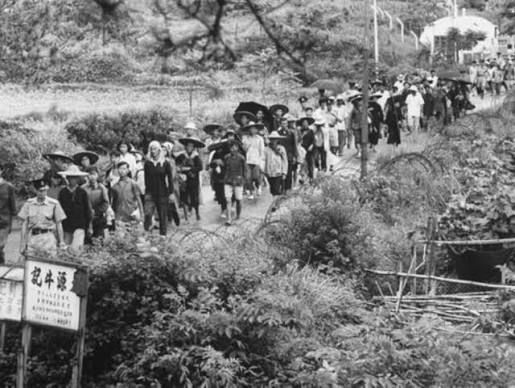
The reason was something that had apparently happened years earlier. I had helped a young woman who was staying in our family home escape from mainland China to Hong Kong. For this act, I had somehow been sentenced to death.
I did not remember the trial. I could not recall the precise judgment. Nor was I entirely certain that October 3 was the correct date.
Yet the sentence seemed to exist, hanging over my life like an old obligation that I had somehow neglected.
The peculiar thing was my composure. I was not trembling. I was not crying. I was simply preparing, almost administratively, for an appointment with death.
My elder brother—or perhaps my second elder brother—was at home with me. I asked him to find my old camera.
It was a real camera, one I had owned and used many years earlier and still possessed in waking life. When we found it, the camera was covered with dust, suggesting it had been neglected for a considerable time.
I switched it on.
Immediately, the autofocus worked perfectly.
Despite the years and accumulated dust, the camera remained fully functional.
This detail would later strike me as one of the most revealing moments in the entire dream.
I also wanted my brother to locate the court documents that had previously been kept with the camera. He found some old papers, but when I examined them, nothing established that I was supposed to be executed.
I began wondering whether I should telephone the court to confirm the date.
Then another thought occurred to me.
Why should helping a young woman escape to Hong Kong deserve the death penalty?
Surely that could not be right.
And even if some court had pronounced such a judgment, why should I voluntarily present myself to be killed?
A completely different possibility suddenly opened before me.
I could disappear.
I could leave everything behind, withdraw into remote mountains and forests, and live beyond the reach of the authorities.
I understood the consequences. I might have to abandon my property, business, possessions, legal identity, and ordinary social existence. I might survive by doing informal work for cash. I could become a person without a recognized place in society.
But I would remain alive.
I asked my brother what he thought. He neither encouraged nor opposed the idea.
I asked my mother whether she remembered the circumstances surrounding the supposed sentence. She confirmed that she remembered the incident involving the young woman.
Yet neither she nor my brother could explain why I was required to die.
Finally, I decided that I would not go to the court.
If necessary, I would disappear into the mountains.
I would go alone.
The emotion accompanying this decision was not exhilaration, exactly. It was a peculiar mixture of relief and hesitation: lightness at the prospect of freedom, accompanied by an awareness that freedom might require surrendering everything I had spent a lifetime building.
Then I awoke.
The Judgment Without Evidence
What interests me most about this dream is that its central authority—the court—never actually appears.
There is no judge, courtroom, prosecutor, or written judgment confirming the supposed death sentence.
The date is uncertain. The documents fail to substantiate it. My family remembers the original incident but cannot verify the punishment.
Nevertheless, at the beginning of the dream, I behave as though the sentence is unquestionably binding.
This raises a disturbing philosophical question: how much of what governs our lives rests upon obligations we have accepted without examining their foundations?
We obey conventions, expectations, inherited assumptions, and institutional demands. Over time, these may become so deeply embedded in our thinking that we no longer distinguish actual necessity from habitual obedience.
The dream dramatized this problem in its most extreme form.
I was preparing to surrender my life to an authority whose judgment I could not even verify.
Then reason intervened.
The decisive moment was not my decision to flee. It was my realization that I had no compelling reason to accept the sentence in the first place.
The accused became the examiner of the accusation.
The authority of the court was reversed.
The Girl Who Escaped to Hong Kong
The young woman provides the dream with a distinctly historical dimension.
For decades during the twentieth century, people attempted to leave mainland China for Hong Kong, sometimes risking imprisonment, violence, or death in the process.
Against this historical background, helping someone escape acquires an obvious moral significance.
In the dream, I never doubted the essential justice of assisting the young woman. What I questioned was the punishment imposed upon that act.
This distinction matters.
I was not attempting to escape responsibility for wrongdoing. I was refusing to accept that an act of assistance necessarily justified the destruction of my life.
Psychologically, the woman might symbolize a vulnerable person seeking liberation. She might also represent an aspect of the dreamer's own desire for freedom.
These possibilities are interpretations, not established facts about the unconscious. Dreams possess no universally reliable symbolic dictionary.
But the dramatic symmetry is difficult to overlook.
First, I help someone else escape.
Later, I must consider escaping myself.
The person who once assisted another's liberation becomes the person whose own freedom is threatened.
The Camera That Still Remembered How to See
Perhaps the most remarkable object in the dream was the camera.
Unlike the uncertain court papers, the unreliable date, and the silent family members, the camera worked exactly as expected.
It was old, covered in dust, and apparently forgotten.
Yet the moment I turned it on, it focused.
There is something almost poetic about this.
A camera does not decide what is morally right. It cannot overturn a judgment or rescue someone from danger. Its essential function is to bring the world into focus and preserve what it sees.
In a dream dominated by uncertainty, it was the one instrument that remained dependable.
Because this was an actual camera from my life, it also possessed a personal significance beyond abstract symbolism. It belonged to an earlier period of my existence, a period whose experiences and perceptions have not entirely disappeared.
The dust suggested neglect, not destruction.
The functioning autofocus suggested continuity beneath apparent abandonment.
I cannot claim that the dream was delivering a supernatural message through an electronic device. But as a literary and psychological image, the camera seemed to express something important.
Even when external institutions become unreliable, the capacity to observe, investigate, remember, and judge may remain intact.
The camera had not forgotten how to see.
Perhaps neither had I.
Choosing Life at the Cost of Identity
The mountain refuge introduced a second, more difficult question.
What exactly was I prepared to sacrifice in order to survive?
Not merely comfort.
I contemplated abandoning almost everything that constituted my recognized existence: property, professional standing, accumulated possessions, family life, and even my legal identity.
Yet I did not regard this possible disappearance as equivalent to death.
The distinction between life and social identity became extraordinarily clear.
Society defines us through names, occupations, documents, relationships, ownership, and status. These structures make civilization possible, but they can also become so entangled with our understanding of ourselves that we mistake them for life itself.
The dream stripped away these distinctions.
If I ceased to be an author, collector, businessman, or publicly identifiable individual, would I cease to exist?
Obviously not.
There would remain a living human being capable of breathing, walking, observing, remembering, and finding sustenance.
The prospect was liberating.
But it was not painless.
I felt relieved at discovering an alternative to death, yet troubled by the magnitude of what I would lose.
That hesitation was essential. Without it, the dream might have become a romantic fantasy of wilderness freedom.
Instead, it acknowledged that worldly attachments possess genuine value.
The Solitary Road into the Mountains
Another detail gave the dream its unmistakably Daoist character.
I did not propose taking my family into exile.
My brothers and mother remained within the familiar world. They witnessed my dilemma, but they did not resolve it.
I would enter the mountains alone.
This does not mean that I wish to abandon my family in waking life. Dreams frequently employ extreme situations to expose questions that ordinary circumstances conceal.
Here, solitude appeared to represent the irreducibly personal character of existence.
Other people may share our experiences, provide advice, and accompany us through much of life. But nobody can ultimately live or die in our place.
The final decision remains our own.
In Daoist literature, mountains frequently appear as places of withdrawal from political ambition, institutional authority, and the pursuit of worldly recognition.
The recluse exchanges prominence for obscurity, artificial complexity for simplicity, and social competition for a different relationship with nature.
Yet the dream's mountains were not necessarily a geographical destination.
They represented the possibility of existence beyond the identities imposed by civilization.
Zhuangzi and the Freedom Not to Obey
The dream invites comparison with the philosophy of Zhuangzi.
In the Zhuangzi, freedom is not simply the ability to choose between externally supplied alternatives. It involves questioning the assumptions that make those alternatives appear unavoidable.
The distinction between dependence and independence, between attachment and spiritual freedom, runs throughout the text.
A person may possess wealth and status yet remain profoundly constrained by them. Another may live in obscurity while enjoying a degree of freedom unavailable to the powerful.
My dream presented this contrast with unusual clarity.
If I appeared before the court, I would preserve my conventional identity until the moment of execution.
If I disappeared into the mountains, I might lose that identity while preserving life itself.
But the deeper Daoist lesson may lie beyond both alternatives.
Perhaps genuine freedom does not require physically abandoning civilization.
Perhaps it begins when we recognize that possessions, status, and social judgments do not exhaust the meaning of our existence.
The mountain, in this sense, may be an inner possibility rather than an actual refuge.
A Rehearsal for Death—and a Refusal to Disappear
From a psychological perspective, the dream might be understood as a symbolic rehearsal for death.
It forced me to imagine the termination of my ordinary life and to decide what, if anything, must be preserved.
But its conclusion was not surrender.
It was a decision to live.
This is why I do not interpret the dream as a prediction of death, nor as evidence that I should abandon my responsibilities and become a hermit.
Dream interpretation is necessarily speculative. No single dream can establish a hidden psychological truth, much less forecast an actual event.
Nevertheless, dreams can become occasions for philosophical self-examination.
This one posed a question with unusual directness:
If everything you have accumulated could be taken away, what would remain worth defending?
My dream supplied an answer.
Life itself. The ability to see, to think, to question, and to choose.
The most surprising discovery was that I did not have to accept the imaginary execution merely because I had once believed it unavoidable.
I could reconsider.
I could refuse.
I could live.
And perhaps that is the final significance of the dusty camera.
Before I contemplated disappearing into the mountains, I recovered an old instrument of vision.
It was still capable of finding its focus.
The court had never proved its authority over my life. The mountains offered an alternative, but the more profound liberation occurred before I entered them.
It occurred when I began to see clearly.
One need not abandon the world to discover freedom. One must first cease allowing the world to decide, without question, what one's life is worth.